Start with four useful categories
Smokefree.gov groups common triggers into pattern, emotional, social and withdrawal triggers. The labels are useful because the same response will not fit all four.
- Pattern triggers: coffee, driving, meals, breaks or phone calls.
- Emotional triggers: stress, boredom, loneliness, frustration or celebration.
- Social triggers: being around people who smoke or attending an event associated with smoking.
- Withdrawal triggers: cravings and discomfort as the body adjusts to less nicotine.
Capture the moment before the cigarette
Ask five short questions: What time was it? Where were you? What were you doing? Who was there? What were you feeling? A one-word answer is enough. The goal is not to write a diary; it is to make an automatic routine visible.
After lunch, in the car, outside work, with a drink.
Restless, stressed, bored, social, tired.
Notice whether it arrived suddenly or built gradually.
Record what you tried and whether it helped for that moment.
| Time | Situation | Feeling | What I tried |
|---|---|---|---|
| 08:10 | Coffee before work | Automatic urge | Changed rooms for five minutes |
| 13:20 | After lunch | Restless | Short walk |
| 18:05 | Commute home | Stressed | Slow breathing |
Look for repetition, not perfection
After several days, circle the situations that appear more than once. A morning cigarette after coffee is a different pattern from an evening cigarette during stress. Choose the most frequent or most predictable trigger first. Changing one repeated routine is more manageable than trying to redesign the entire day.
A cigarette tracker app can make timing and weekly patterns easier to review, but paper notes work too. The useful part is the honest observation.
Prepare one response before the trigger arrives
For a routine trigger, change the sequence or location. For an emotional trigger, plan a short alternative such as slow breathing, movement or contacting someone supportive. For social triggers, tell people what support you need. Withdrawal may require evidence-based treatment rather than willpower alone.
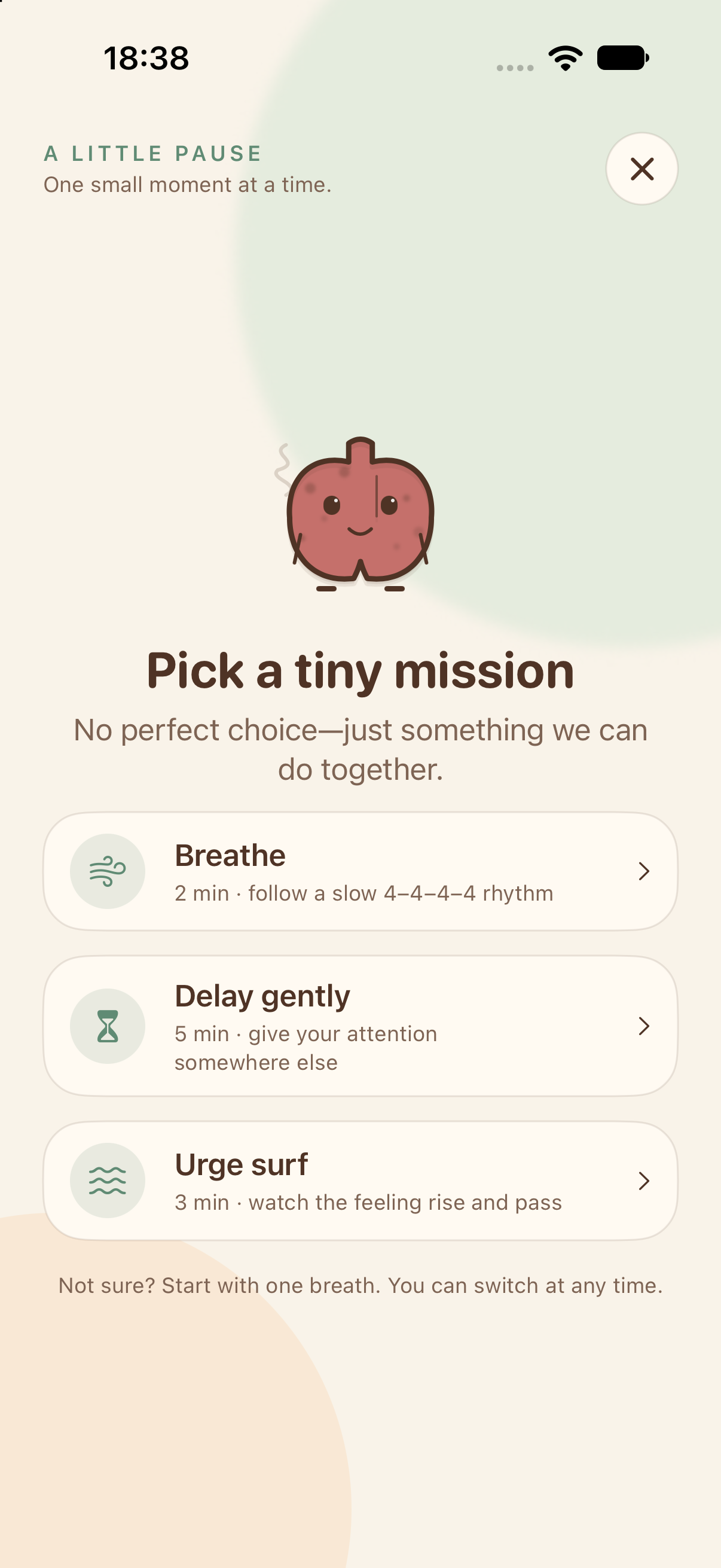
Do not manage withdrawal in isolation if you need help. The CDC advises that counseling and cessation medications can help with cravings and withdrawal. A healthcare professional or quitline can help you choose an appropriate option.
Know when an app is not enough
An app can support awareness, planning and progress tracking. It cannot evaluate medication safety, diagnose symptoms or provide emergency care. Seek professional support if withdrawal feels unmanageable, if your mood becomes concerning, or if you want help choosing cessation medication.
Sources
- Smokefree.gov: Know your smoking triggers.
- Smokefree.gov: Build your quit plan.
- CDC: How to quit smoking.
Reviewed against public guidance from the CDC and Smokefree.gov on November 15, 2026. This guide is educational and does not replace individualized medical advice.

Notice the pattern without judgment
Keep the next step visible.
Calmber brings cigarette logs, timing patterns, an adjustable plan and in-the-moment craving support into one private iPhone companion.
View Calmber on the App Store ↗