Track to understand, not to grade yourself
A number becomes useful when it gives you something to act on. A daily cigarette count can show direction, but it cannot explain why one day was harder than another. Time and context can reveal repeated routines: the first coffee, a drive, a work break or a stressful conversation.
Smokefree.gov recommends learning when, where and with whom you tend to smoke because recognizing those patterns can help you prepare for triggers. A tracker can make that observation easier, but it is not a diagnosis or a replacement for professional cessation support.
Begin with the smallest useful record
- Time: when the cigarette happened.
- Daily total: a simple count you can compare across days.
- Context when useful: coffee, driving, a break, alcohol, stress or social company.
- Craving or feeling: a short label rather than a long journal entry.
- Corrections: the ability to fix a missed or incorrect log later.
Do not collect detail merely because the app allows it. If recording every field becomes tiring, keep the count and time first. Consistency is more useful than an elaborate log you abandon.
Review patterns over a week
Look for clusters rather than isolated events. Are most cigarettes concentrated in the morning? Does the interval between them become shorter after work? Are weekends different? Pattern, emotional, social and withdrawal triggers need different responses, so the context matters more than simply labeling a day as good or bad.
Important: nicotine dependence and withdrawal are health matters. Counseling and approved cessation medications can help. Talk with a healthcare professional or an established quit service about an approach that fits your health and circumstances.
What to look for in a cigarette tracker app
- Fast logging in the moment
- Editable history
- Daily and weekly patterns
- A plan that can recover after a difficult day
- Clear privacy information
- Shame-based streaks
- Health promises without sources
- Rigid plans that cannot reflect real life
- Unclear data sharing
- Claims that an app replaces treatment
Use the record to plan the next moment
The best outcome of tracking is a practical next step. If coffee is a repeated trigger, change that routine. If a cigarette reliably follows stress, prepare a short alternative before the situation arrives. Read how to identify smoking triggers for a simple observation exercise.
Sources
- Smokefree.gov: Build a plan to quit smoking or vaping.
- CDC: How to quit smoking.
- Smokefree.gov: Know your smoking triggers.
Reviewed against public guidance from the CDC and Smokefree.gov on November 15, 2026. Calmber offers behavioral tracking and general support, not medical advice, diagnosis or treatment.

Calm support for a real process
See the plan and the pattern together.
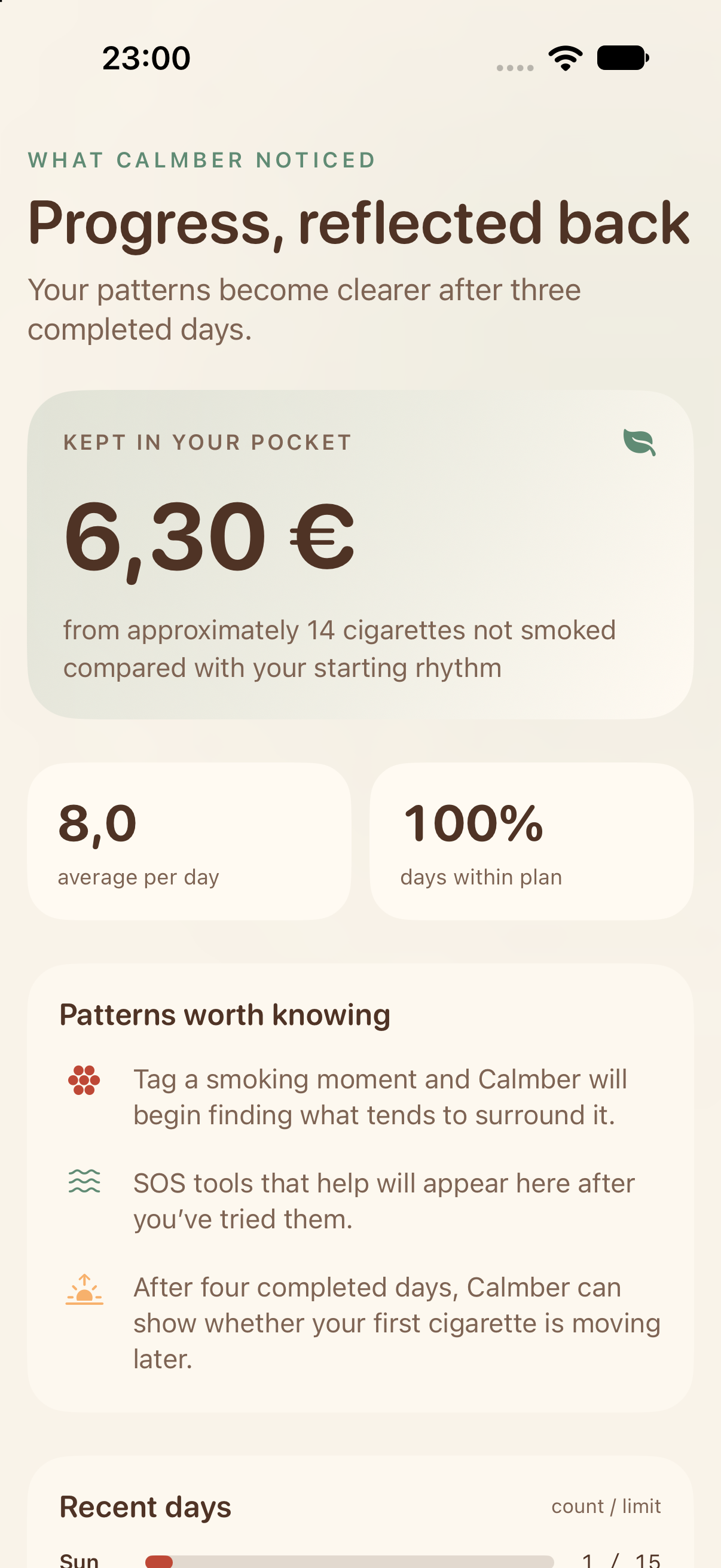
Calmber combines quick cigarette logging, an adjustable taper plan, craving support and progress insights on your iPhone.
View Calmber on the App Store ↗